Health insurance is where the small print does the real damage. Term insurance is simple. You either have cover or you do not.
Health policies are not like that. Two policies can both say five lakh cover. At the hospital billing counter, they can behave very differently. This article is a checklist. It shows what to look for before you buy.
1. Your Office Policy Is Not Enough
Many people have just one health policy. It came from their employer. It feels like enough. It usually is not.
- It ends when the job ends. If you resign or retire or are asked to leave, the cover stops that day. That is often the worst time to be buying a new one.
- It is often small. Three or five lakh sounds fine. Then somebody needs surgery in a city hospital.
- The company can change it. Employers switch insurers and cut benefits every year. You get no say in it.
There is a fourth reason. It is the most important one. Health policies make you wait before they cover certain things. That waiting starts on the day you buy. So say you use office cover until you are 45. Only then do you buy your own policy. Your waiting now starts at 45. You are also older. You may be less healthy. So the policy costs more, and it may leave things out.
Buy your own policy while you are young and healthy. Treat the office one as a bonus.
2. The Small Print That Bites
These five things decide how much you actually get paid.
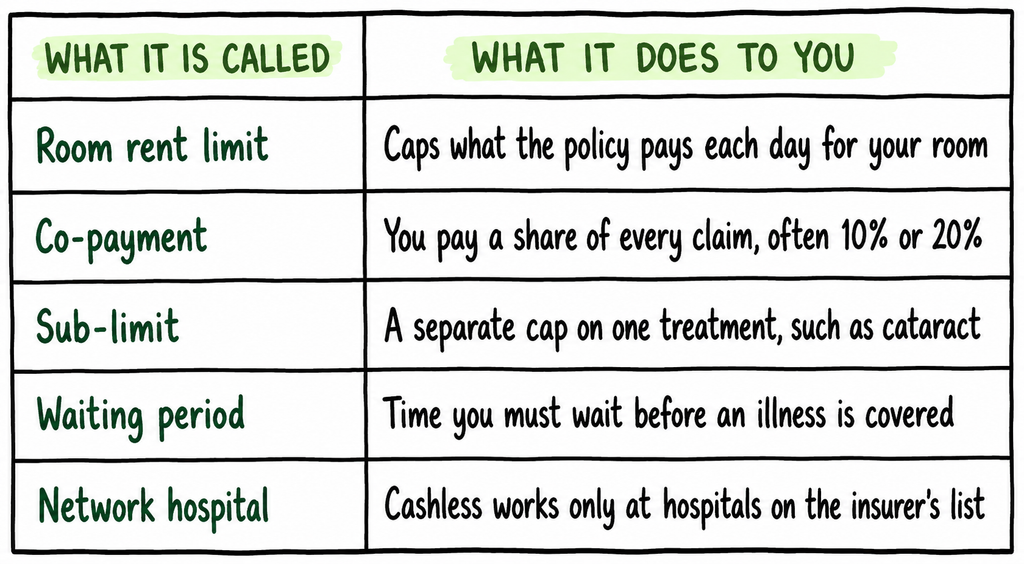
The first one needs a proper explanation. Most people do not know what it can do to them.
The room rent trap
Say your cover is five lakh. The policy caps room rent at 1% of that. So it pays ₹5,000 a day for your room. You are admitted. The room costs ₹10,000 a day. That is twice your limit. You would expect the insurer to pay ₹5,000 and leave you the rest. That is not what happens. Many policies cut the whole bill by the same share. Your room was double the allowed rate. So they pay half of everything. Not half the room. Half the surgeon. Half the medicines. Half the tests.
On a bill of ₹3,00,000, they pay ₹1,50,000. You pay ₹1,50,000. And you thought you had five lakh of cover. This line matters more than almost anything else in the document. Look for a policy with no room rent limit. Cannot find one you can afford? Then pick a high limit. And remember your ceiling on the day you are admitted.
3. Waiting Periods
A waiting period is time you must wait after buying, before something is covered. Every policy has a few.
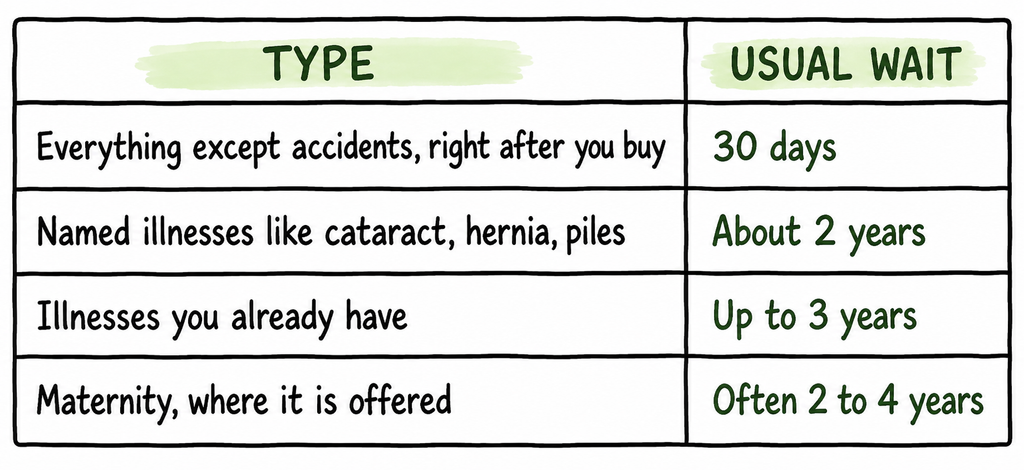
That third line used to be four years. The insurance regulator cut the limit to three. So new policies now wait less than old ones did.
An illness you already have is called a pre-existing condition. Diabetes and high blood pressure are the common ones. You must tell the company about them when you buy. Some people hide these. They want a cheaper price, or an easier approval. It is the same mistake as hiding things on a life insurance form. The claim gets rejected later. That is exactly when the money was needed.
Here is one protection worth knowing. Once you have held cover for five years without a break, the insurer can no longer reject your claim by saying you hid something. Only proven fraud is left out. That five year clock is another reason to buy early. It is also a reason never to let a policy lapse. If you stop and start again, every waiting period starts from zero.
4. How Much Cover, and For Whom
Hospital bills in Indian cities have risen a lot. A serious illness can easily cross five lakh. Three lakh of cover is not much protection now. There is a cheap way to get a big cover. It is called a top-up, and not enough people use it. A top-up is a second policy. It only starts paying after your bills cross a set amount. It does nothing for small claims, so it costs very little. So you might hold a normal policy of five lakh. Above that, a top-up covers another twenty lakh. That protects you against the rare, very costly event. Small bills you can handle yourself. A twenty lakh bill you cannot.
Two more choices come up.
- One policy for the family, or one each. A family floater is a single cover shared by everyone. It is cheaper. The risk is that one bad year for one person can use up the cover for all of them.
- Your parents. Adding elderly parents to your policy pushes the price up sharply. The price follows the oldest person on it. A separate policy for them is often cheaper.
There is good news on price. Since 22 September 2025, individual health policies no longer carry GST. That tax used to add 18% to your bill. Family floater and senior citizen policies are included. So are renewals, not just new policies. Group policies bought by employers still pay the tax. If you last checked prices before that date, check again. They are lower than you remember.
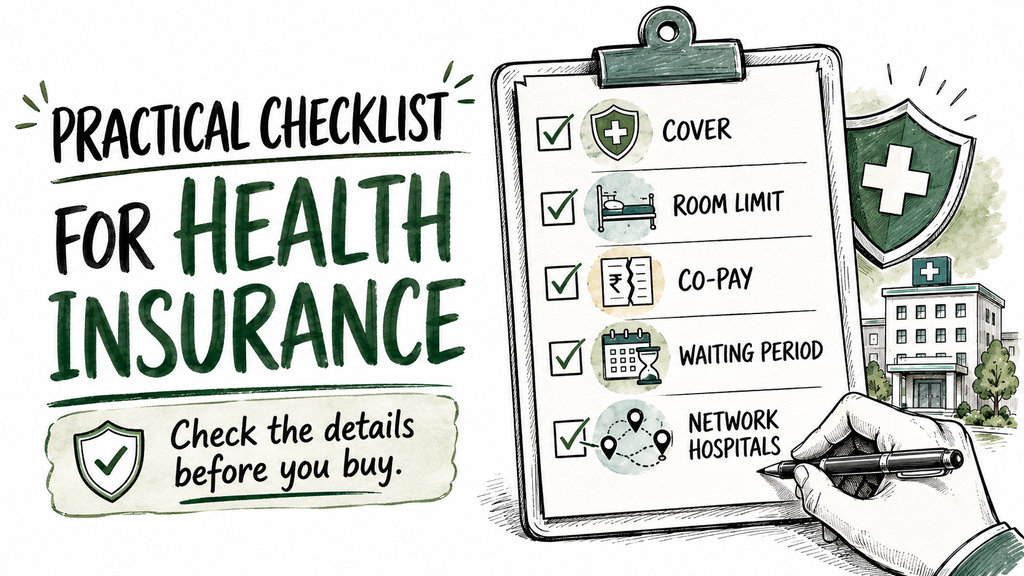
5. The Checklist
Go through this before you pay for anything.
- Is there a room rent limit? Try to find a policy with none.
- Is there a co-payment? Avoid it if you can, especially for older members.
- Are there sub-limits on common surgeries? Read that list properly.
- How long is the wait for any illness you already have?
- Are the hospitals near your home on the cashless list? Check two or three of them.
- Have you told them about every illness, medicine and past operation?
- Is the cover big enough for a city hospital? Have you thought about a top-up?
- Does your family know the policy exists, and where the card is kept?
One more thing helps at a bad moment. Insurers must now approve a cashless request within three hours of getting the final bill. If they take longer and the hospital charges for the delay, the insurer pays it. Not you. Remember that if you are ever left waiting at a discharge counter.
Health insurance is a dull thing to buy. But it is the policy you are most likely to use. Reading the small print, or skipping it, can be worth lakhs on a single hospital stay. Take one evening. Work through the list. Then renew it every year without fail.
This article is for learning. It is not personal advice about your money. It is not a recommendation of any company or policy. Rules and prices change, and every policy is worded differently. Please read your own policy document, and check current details before you buy. For advice about your own situation, speak to a qualified insurance adviser who does not earn a commission on what they suggest.