
An emergency fund is money kept aside for the months when your income stops or a large bill lands. This calculator works out how much you need, how far along you are, and where to keep it.
Move the sliders, or type your own numbers.
Where to keep it
Split by how fast you need to reach the money, not by what earns most.
This is a guide, not a rule. If your income is irregular or your job would take a long time to replace, lean towards more months rather than fewer.
How to read this
The big number is your target. It is simply your monthly essential spending multiplied by the number of months you want to cover. The bar shows how far along you are. The dark part is what you have put aside already. The most useful line is the last one. It tells you how many months you could actually get through today. Most people find that number is smaller than they assumed.
Getting the spending figure right
This is where the calculator goes wrong most often, so it is worth a minute. Do not use your salary. Use what you must spend to keep life running if the income stopped tomorrow. Include rent, food, electricity, phone, school fees, medicines, travel to work, insurance premiums and every loan payment. Leave out holidays, eating out, shopping and subscriptions. In a difficult month those stop on their own. Loan payments are the ones people forget. They do not pause because your income did.
How many months to pick
The right answer depends on how quickly your income could come back.
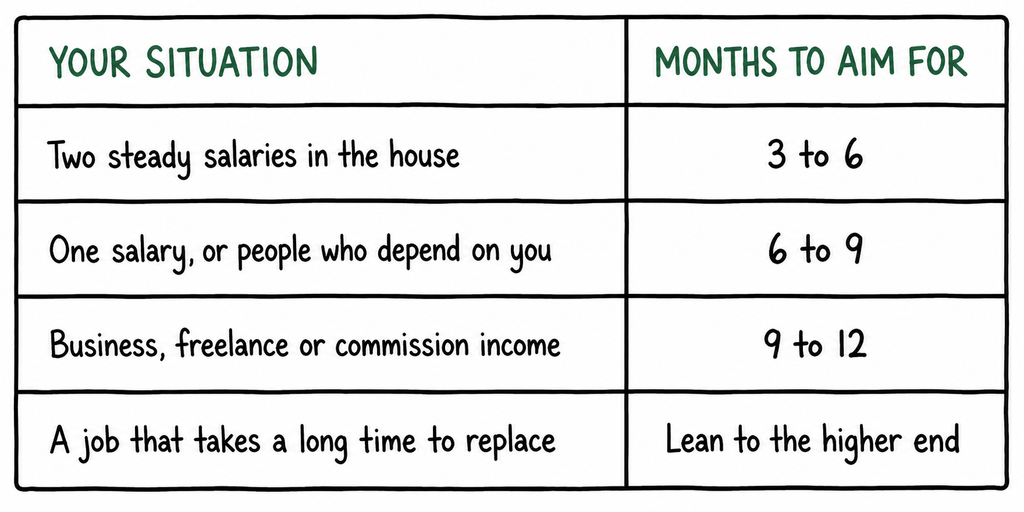
If you are starting from zero, do not aim at six months on day one. That number is large enough to put anybody off. Set the calculator to one month and save that first. Then two. The habit matters more than the target.
Where to keep the money
An emergency fund has one job. It has to be there on the day you need it. So the split above is by speed of access, not by return. One month sits in your savings account. You can reach it at midnight on a Sunday. That is the part that handles a hospital admission or a car that will not start. The next two months go into a liquid fund. The money usually reaches your account on the next working day. Anything beyond that can sit in a short term debt fund. You are unlikely to need all of it at once, so it can work a little harder.
One thing to avoid. Do not keep this money in shares or equity funds. The day you lose your job may well be a day the market is down, and you would be selling at the worst possible moment. Yes, a savings account earns very little. That is the price of the money being certain. This is the one place where lower growth is the right choice.
There is more on building the fund month by month in build an emergency fund that fits your life. If you are still setting things up, before your first investment explains why this money comes before any investing.
This calculator is for learning. It is not personal financial advice. The suggested split is a general guide and not a recommendation of any particular product. Liquid funds and debt funds are not guaranteed and their value can move, unlike money in a savings account. For advice about your own situation, speak to a SEBI-registered investment adviser.