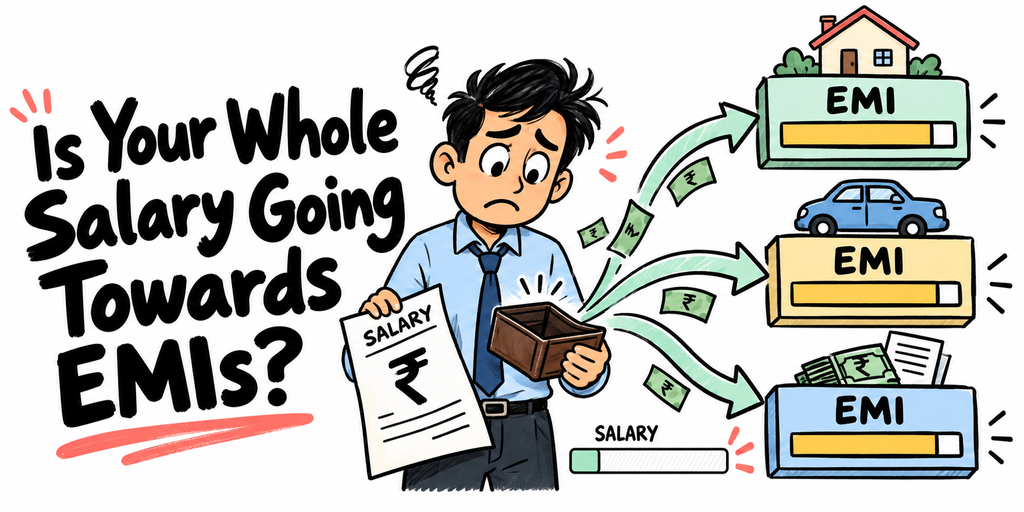
Your salary lands at the start of the month. Within days most of it has gone on loan EMIs, rent, groceries, school fees and bills. By the middle of the month there is hardly anything left.
Then something goes wrong. Your child needs a doctor, the bike needs repairs, the fridge stops working. With no savings to fall back on, a credit card or another loan can look like the only way out.
This is how the debt cycle starts. You borrow to get through one emergency, then borrow again to pay off that borrowing.
If this is you, do not expect to fix it in a month. The first job is to stop the debt growing. Here are three steps that help.
1. Find Out Where Your Money Actually Goes
Before you try to save more, write down everything you owe and everything you pay each month:
- Home, vehicle and personal loan EMIs
- Credit card balances
- Rent
- Groceries and bills
- School fees
- Insurance premiums
- Subscriptions and anything else that repeats
Then split them in two. What you must pay, and what you could cut for now.
Say Arun earns ₹60,000 a month. His month looks like this:
- Home loan EMI: ₹22,000
- Personal loan EMI: ₹10,000
- Credit card payment: ₹6,000
- Groceries and bills: ₹12,000
- Travel and everything else: ₹8,000
That leaves Arun ₹2,000. Until he writes it all down, he may not see that ordering food in, subscriptions he forgot about and cab rides are taking ₹4,000 of it.
Cut those back and he frees up ₹2,000 or ₹3,000. That money can go straight at the debt.
Focus on the Most Expensive Debt First
Not all loans cost the same. A home loan is usually the cheapest money you owe. A credit card is the priciest, and it grows fast if you pay only the minimum each month.
Suppose you have:
- A home loan charging 8.5% interest
- A personal loan charging 15%
- Credit card debt charging more than 30%
Here, spare money on the card does far more good than the same money on the home loan.
Keep paying the EMI or the minimum on everything. Put whatever is left over on the debt with the highest rate. Clear that one, then move to the next.
2. Build a Small Emergency Fund
When the EMIs are already tight, putting aside ₹1,000 or ₹2,000 can feel pointless. It is not. A small emergency fund is what stops the next surprise turning into new debt.
Meena has nothing put by. Her scooter needs a ₹7,000 repair, so it goes on the credit card. If she cannot clear the bill in full, the interest starts running. Had she put away ₹1,500 a month for five months, she would have had ₹7,500 ready. The repair would have cost her nothing extra.
Do not aim big at first. Start at ₹10,000, or one month of what you have to spend. Keep it in a bank account you can reach quickly, away from the one you spend from. As the debt shrinks, build towards three to six months of essential spending.
3. Put Every Pay Rise to Work
A raise, a bonus or a tax refund usually gets spent. A better car, a new phone, a bigger holiday, and the money is gone. Split it instead, between paying down debt and saving.
Say Ravi gets a bonus of ₹50,000. He could put:
- ₹30,000 against his costly personal loan
- ₹15,000 into his emergency fund
- ₹5,000 towards something for himself or the family
He still enjoys part of it, and he ends the month better off than he started. A pay rise works the same way. If your salary goes up by ₹5,000, send ₹3,000 to the debt, save ₹1,000 and spend the last ₹1,000. Before you pay a big lump off a loan, read the terms. Some lenders charge a fee for paying early.
Do Not Take a New Loan Only Because the EMI Is Lower
A new loan with a smaller EMI looks like relief. Often the EMI is smaller only because the loan now runs for longer. Say you owe ₹12,000 a month with two years to go. Another lender offers to bring it down to ₹8,000 a month by stretching the loan to four years.
The monthly pain drops. The total you hand over can rise a lot. Before you switch, compare:
- The new interest rate
- The total interest you will pay
- How long the loan now runs
- Processing and early payment fees
- The total you will repay in the end
Switching is worth it when it truly cuts the total cost. It is not worth it when it only pushes the problem further out.
What Should You Do When an EMI Ends?
Your bike loan EMI of ₹5,000 ends this month. It feels like a ₹5,000 raise. Keep treating it as money already spoken for. You could use it to:
- Clear a costlier loan faster
- Build your emergency fund
- Buy the cover you are missing
- Start investing each month, once the costly debts are under control
That stops your spending creeping up every time an EMI ends or your pay goes up.
Never Miss a Payment
A late payment brings a penalty and extra interest. It also marks your credit record, which makes the next loan harder to get and costlier when you get it. If you think you will miss one, ring the lender before the date, not after. Ask what they can do. Ignoring the calls only makes it worse. And do not pay one credit card with another. It buys a few weeks and makes the hole deeper.
Small Progress Still Matters
Getting out of debt is slow. You will not see much for the first few months. It still adds up. Saving ₹2,000. Cancelling a subscription you never use. One extra payment. Each looks too small to matter. Together they make room in the month.
Start with three habits:
- Track every expense and every debt.
- Build a small emergency fund.
- Send any extra money to the costliest debt.
The first goal is simply to stop things getting worse. After that, every spare rupee should cut your debt, build your savings or buy your future, not add one more bill to the month.
This article is for learning. It is not personal financial advice. The names and figures here are made up, to show how the sums work rather than to describe anyone real. Rates, fees and terms differ by lender and change over time, so check your own loan papers and your lender’s current charges before you act. For advice about your own money, speak to a SEBI-registered investment adviser.