
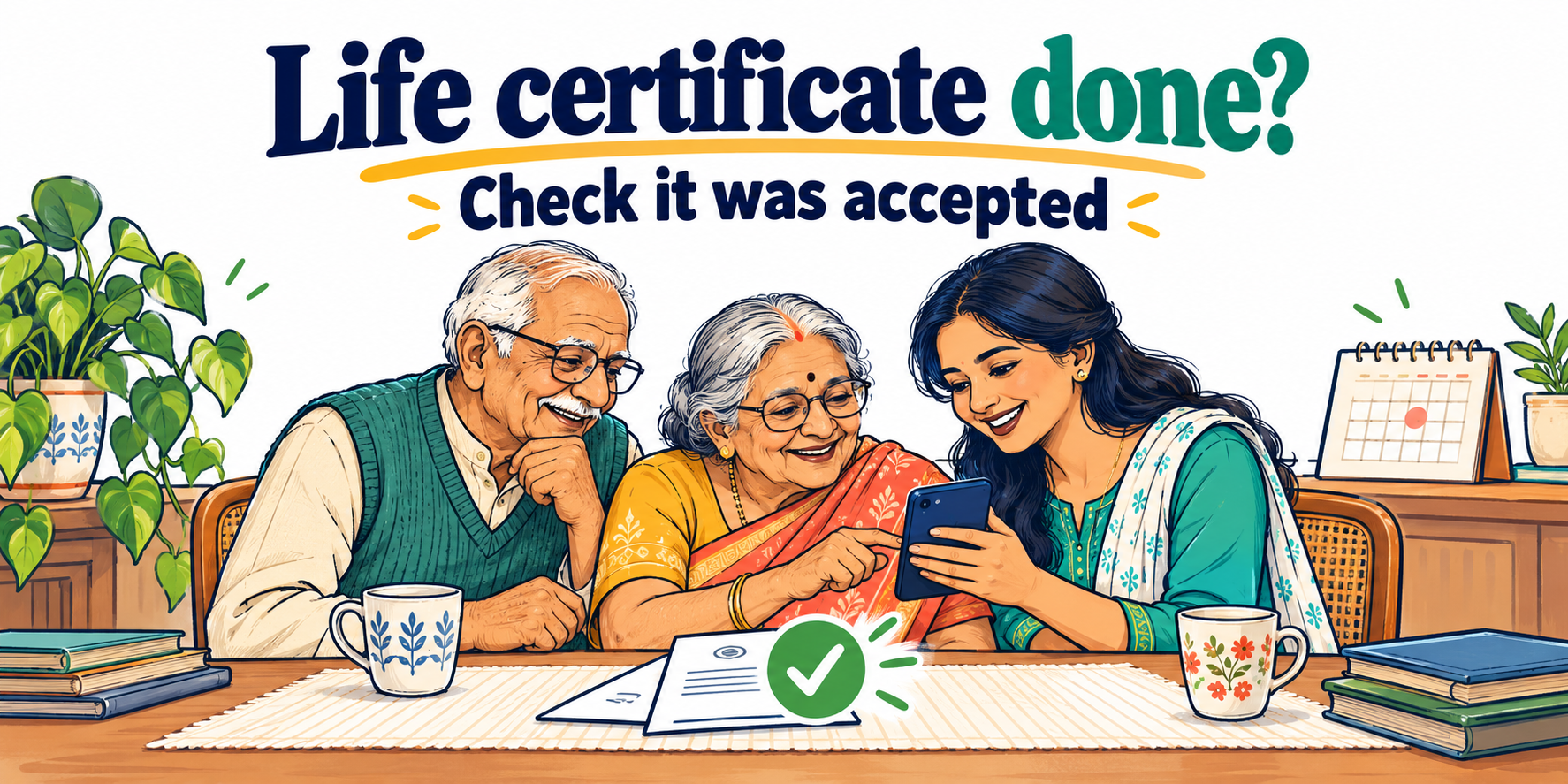
A pensioner completes the digital life-certificate process, receives an SMS and puts the phone away. The family assumes the annual pension paperwork is finished. One check still matters: has the pension-paying authority accepted the certificate?
Jeevan Pramaan’s official FAQ says a generated Digital Life Certificate remains subject to approval by the pension sanctioning or disbursing authority. A receipt is useful evidence, but it is not a reason to ignore a rejection or an unresolved status.
Why October is a useful time to check
For central-government civil pensioners and family pensioners covered by the CPAO instructions issued on 23 July 2019, those aged 80 and above can submit their annual life certificate from 1 October. The early window took effect in 2019; it is not a new rule introduced in 2026.
A government release dated 30 January 2020 confirms the October facility and the annual 30 November submission deadline under these arrangements. If your pension comes from a state scheme, EPFO or another authority, check that scheme’s own due date and validity rules rather than assuming this calendar applies.
Three checks after generating the certificate
- Match the pension details. Keep the Pension Payment Order (PPO), pension-account and bank details beside you while completing the process. The official portal explains that these details, Aadhaar and a mobile number are used to generate the certificate. Check the entries against your records.
- Check acceptance. Use the official portal’s pensioner facility to download the certificate and see its status. If it is rejected, contact the pension-disbursing agency. The FAQ warns that incorrect particulars can cause rejection. Follow the agency’s instructions to correct the problem.
- Keep a small evidence folder. Save the certificate, Pramaan ID, generation date and any follow-up acknowledgement. A paper copy can help a family member assist you later. Keep personal identification and account details private.
For example, an 82-year-old central civil pensioner may complete the process in October with a daughter’s help. They can add a second reminder to the family calendar: check the status after generation. If the certificate is rejected, October leaves time to speak to the bank and resolve it before the annual deadline. The reminder is a practical household habit, not an official processing-time promise.
Choose a method that works for the pensioner
Jeevan Pramaan is an additional facility, not the only way to submit a life certificate. Its FAQ lists assisted routes through service centres and pension-disbursing agencies, and explains that the face app uses the phone’s camera without a separate biometric device. Check current official app instructions before using it.
The pension-sanctioning authority must be onboarded to Jeevan Pramaan, and certificate validity follows that authority’s rules. For re-employed or remarried pensioners, the FAQ directs use of the conventional route. If the digital process is difficult or your situation is unusual, ask the pension-paying agency which accepted route to use.
The useful finish line is an accepted certificate and a saved record. A few minutes spent checking that final step can prevent an avoidable pension follow-up becoming a household cash-flow problem.
Sources: CPAO circular, 23 July 2019; PIB release, 30 January 2020; Jeevan Pramaan portal, marked updated 23 July 2026; official FAQ, checked 7 October 2026 (no publication date displayed). Submission windows and eligibility must be checked for the pension scheme concerned.