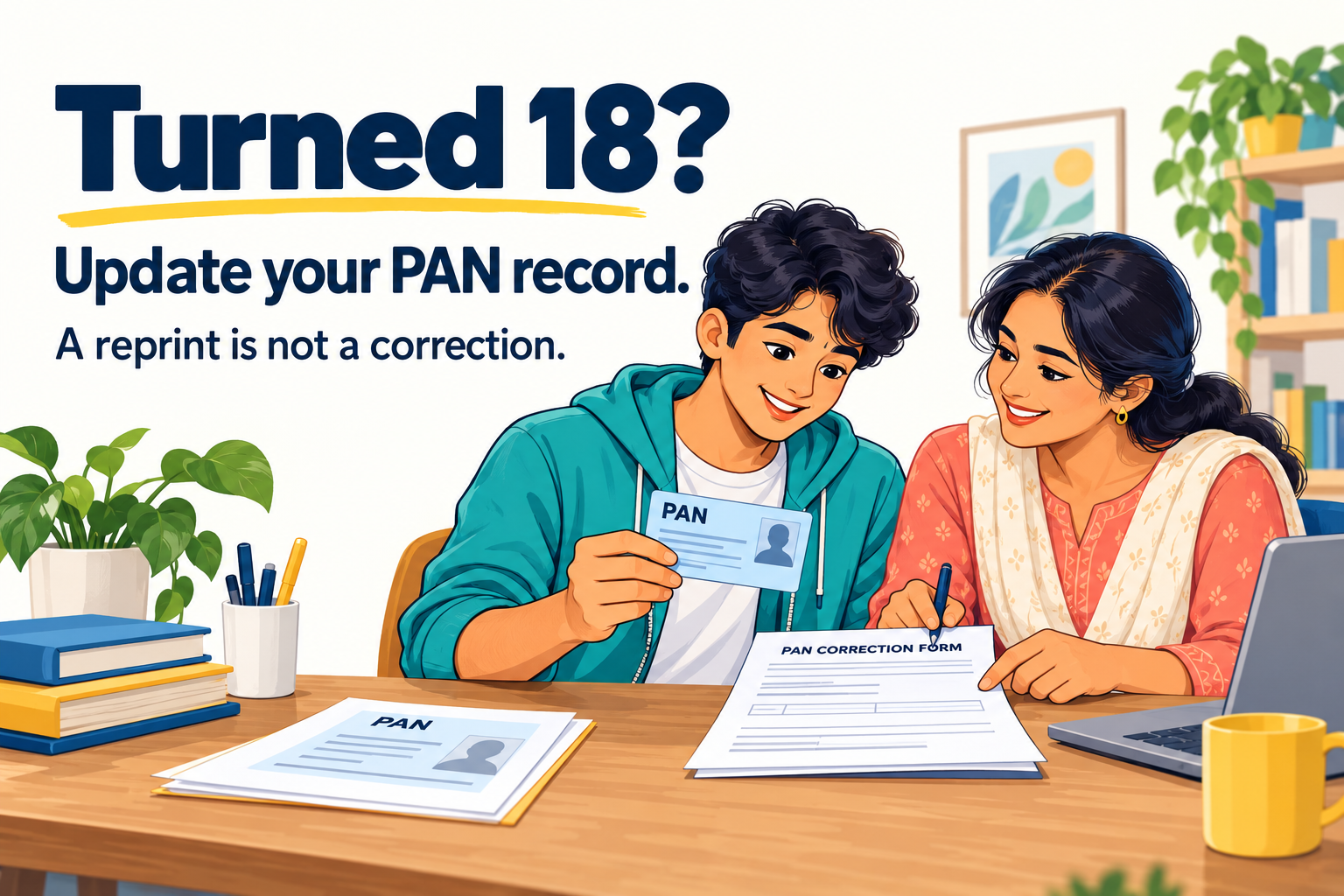
A PAN card issued during childhood can be easy to forget until the
first adult financial application. If its photograph or signature needs
updating, ordering another copy is not the same as correcting the
record.
The useful distinction is between your PAN number, the details held
against it and the card that displays those details. Growing up does not
mean starting again with another PAN number.
Start with the
problem, not the cheapest button
Imagine Aditi, who has just turned 18. Her family finds the PAN card
obtained for her years ago. They want a card with her current photograph
and her own signature. A reprint option looks like an easy answer.
But a fresh envelope can contain the old information. Protean’s
separate online reprint guidelines explicitly say that the facility
does not offer updates and prints the existing PAN details. If Aditi
needs those details changed, she needs the correction process, not
merely another copy. This example is hypothetical.
Before applying, write one sentence: “I need these details changed.”
List the photograph, signature and any incorrect personal or contact
information. If nothing needs changing and the card is simply lost or
damaged, reprinting is a different task.
Keep the
number; use the current correction route
Protean’s
minor-PAN explainer confirms that the ten-character PAN remains the
same after a minor becomes an adult. Its background explanation should
not be mistaken for the latest form instructions: the current official
forms have changed.
The Income Tax
Department’s PAN page, last updated on 17 April 2026, lists
PAN CR-01 for an individual’s change or correction
request. The CBDT
correction order dated 17 April 2026 makes the prescribed correction
forms applicable from 1 April 2026, with submission
through Protean or UTIITSL online or at their PAN centres.
This is an existing process, not a new October announcement or a
special birthday scheme. Use the links from the department’s page rather
than a saved old form or an advertisement for a new PAN.
Check the record you
want to end up with
Put the existing PAN, current photograph, signature and supporting
documents together before starting. Use the current form and the chosen
provider’s instructions for the submission method. Check which evidence
is required for each requested change; do not assume that one document
proves every detail.
Read the full name, date of birth, address and contact details
carefully before confirmation. The current correction form includes
parent details as well: becoming an adult does not mean casually
deleting every reference to a parent.
Where the young adult completes the application in their own
capacity, the declaration and signature should reflect that applicant.
Seek the provider’s guidance if a representative is still needed for
another reason.
Photo specifications, document handling and charges can depend on the
current route. Follow the live instructions rather than an old
screenshot. No fee or processing-time promise is made here.
Finish with
verification, not just payment
Save the acknowledgement and payment receipt. The department says
applications can be tracked using the acknowledgement or reference
number on the provider’s designated portal. When the corrected card or
e-PAN arrives, compare the requested changes and the PAN number with
your records.
Separately ask the bank or investment provider whether any age-18
account formalities remain. Do not treat delivery of a PAN card as
confirmation that every financial account has been updated.
The aim is not simply a newer-looking card. It is the right details
attached to the same tax identity.
Sources checked 18 October 2026. Protean’s reprint guidelines and
minor-PAN explainer show no publication date; they are cited for the
limited points above, not as evidence of a new rule. General educational
information, not personalised tax or legal advice.