When you owe money on more than one thing, the order you clear them in changes what the whole exercise costs you. This compares the two methods people actually use. Fill in the debts you have and leave the rest at zero.
Avalanche
Highest interest rate first
Snowball
Smallest balance first
Which one to clear first
Pay every minimum, then put the whole extra on the debt at the top of this list. Highest rate first.
Both methods assume you keep paying the same total every month. When one debt clears, its payment rolls onto the next. That rolling is what makes either method work, and it is why the total going out must not fall.
The two methods
Both work the same way at the start. You pay the minimum on everything, every month, without fail. Then you take whatever else you can spare and throw all of it at one debt. Only one.
The only question is which one.
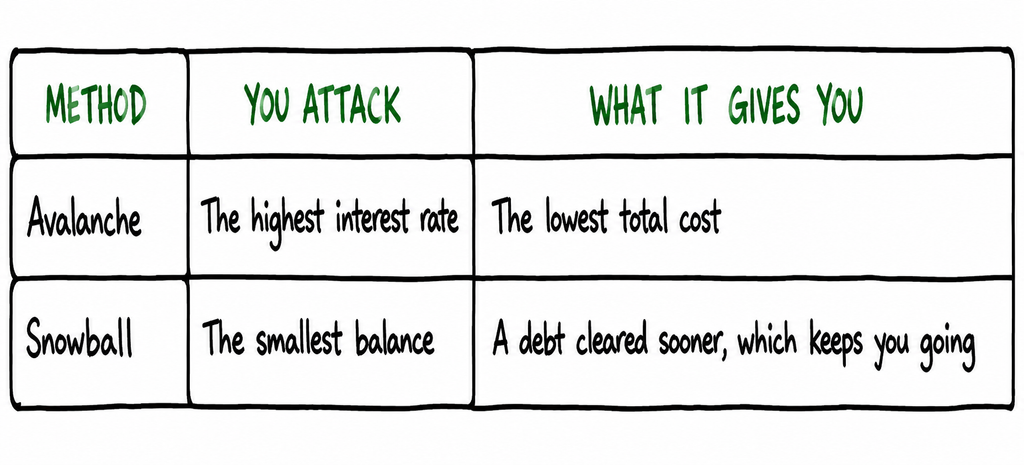
Avalanche always costs less. That is just sums, not opinion.
Snowball wins on something the sums cannot see. Clearing a whole debt in the second month feels like progress, and people who feel progress keep going.
Look at the gap between the two in your own numbers. If it is small, take the snowball and enjoy it. If it is large, the avalanche is worth the patience.
Why the rolling matters
Here is the part people miss, and it is the part that does the work. When a debt is finally cleared, its payment does not go back into your pocket. It moves onto the next debt in the list. So the amount leaving your account stays the same every month from start to finish. What changes is that more and more of it lands on one target. That is why the last debt goes so fast. By then it is absorbing every payment at once. Let that money drift back into everyday spending and the whole plan stretches out by years. This is where most attempts quietly fail.
The credit card comes first
If you carry a balance on a credit card, look at the rate you typed in. Indian cards commonly charge around three and a half per cent a month. Over a year that is more than forty per cent. No investment you will find pays that. So clearing card debt is the highest return available to you, and it is certain. There is one warning worth repeating. Paying only the minimum on a card is close to paying nothing. Most of it disappears into interest and the balance barely moves.
Try it above. Set the extra to zero and see what happens to the time. The credit card minimum payment calculator takes one card on its own and shows how many years that habit actually costs you.
Before you throw everything at it
Clearing debt fast is good. Clearing it with nothing left in reserve is not. If the car needs repairing halfway through and you have no buffer, the repair goes on the credit card. You end up back where you started, with less patience. Keep a small buffer while you clear the debt. One month of essential spending is enough to stop the cycle restarting. The emergency fund calculator will size that first month for you.
To find the extra amount in the first place, the budget calculator shows what your pay can realistically release each month. And once the debts are gone, that same payment is already a habit. The SIP calculator shows what it could become if you keep paying it to yourself instead.
This calculator is for learning. It is not personal financial advice. It assumes your interest rate and minimum payment stay the same throughout, which real lenders do not always do, and it ignores late fees, processing charges and any penalty for repaying a loan early. Check your own loan terms before making extra payments. For advice about your own situation, speak to a SEBI-registered investment adviser.