A step up SIP is an ordinary SIP that grows a little every year, usually alongside your salary. The idea is simple. The effect over twenty years is not.
With and without the step up
Same starting amount, same return, same years.
What you pay each year
Your monthly amount, year by year. The last one is the commitment to check.
This assumes you invest at the start of each month, raise the amount on the same date every year, and never miss one. Real returns move up and down, so treat the result as a guide rather than a forecast.
Why a small increase does so much
Raising your SIP by ten per cent a year sounds modest. Over twenty years it roughly doubles what you end up with.
Two things are happening at once. The obvious one is that you invest more. The less obvious one is that the increases themselves compound, because each year's raise is applied to an amount that was already raised. Ten per cent a year for twenty years is not double. It is six times.
Read the last number carefully
The figure worth staring at is not the one at the top. It is the final monthly amount. On the numbers this page opens with, a ten thousand rupee SIP becomes about sixty one thousand a month by year twenty. That is a real commitment, not a rounding error. The plan only works if your income actually gets there. So set the step up to something your salary can plausibly follow. If you expect raises of eight per cent, stepping up by fifteen will quietly outrun you, and the plan will break in year twelve when it hurts most.
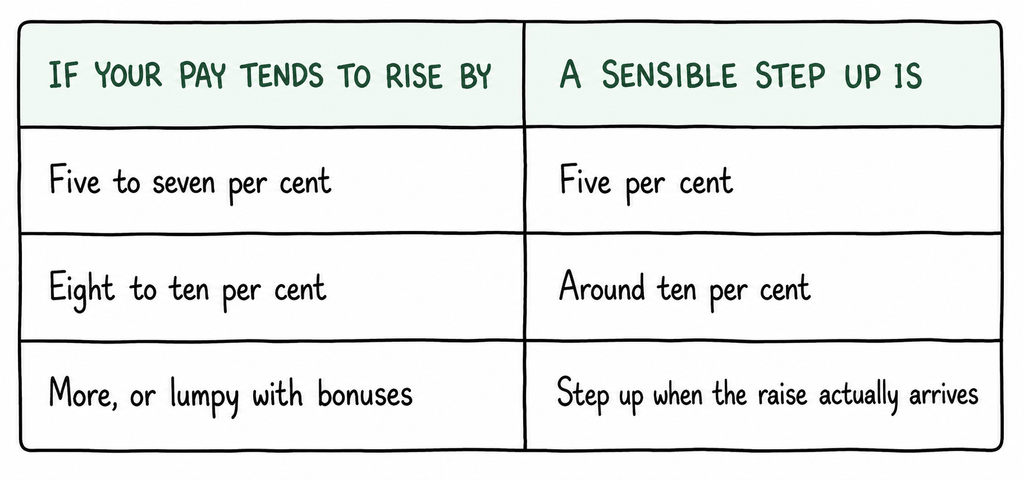
That last row is the honest one. Nobody is obliged to automate this. Raising the amount by hand each year, after the raise lands, works just as well and never outruns you.
The inflation point
There is a quieter reason to step up, and it has nothing to do with ending up richer. A fixed ten thousand a month is worth less every year. After fifteen years at six per cent inflation it buys what about four thousand buys today. So a flat SIP is not standing still. In real terms it is shrinking. Stepping up by roughly the rate of inflation just keeps you where you started. Anything above that is genuine progress.
Before you set this up
Most fund houses and apps let you set a step up when you start the SIP, often called a top up. Some let you add it later, some do not. Check whether yours applies the increase as a percentage or as a fixed rupee amount. A fixed amount does not compound and gives you a far flatter climb than this calculator shows. And check you can pause or reduce it. A step up you cannot stop is a problem in a bad year.
For the ordinary version without increases, the SIP calculator is simpler. To work out what you can realistically start with, try the budget calculator, and the savings rate calculator shows what raising the amount does to the year you could stop working.
This calculator is for learning. It is not personal financial advice and it is not a forecast. It assumes a steady return and that every instalment is paid on time, which real life rarely allows. Tax and fund charges are ignored, and both reduce what you actually receive. Money that can grow can also fall in value. For advice about your own situation, speak to a SEBI-registered investment adviser.