
Everything you own is probably tied to one country. Your job. Your rent. Your savings. Your investments. All of it rides on how India does. That is a lot riding on one outcome. Owning something outside India is how people spread that risk. It is also more work than it sounds, and the easy route keeps shutting. Here is what is actually involved, and whether you need it yet.
1. Two Routes, Very Different Effort
There are two ways to own foreign assets. Almost everything that follows depends on which one you pick.
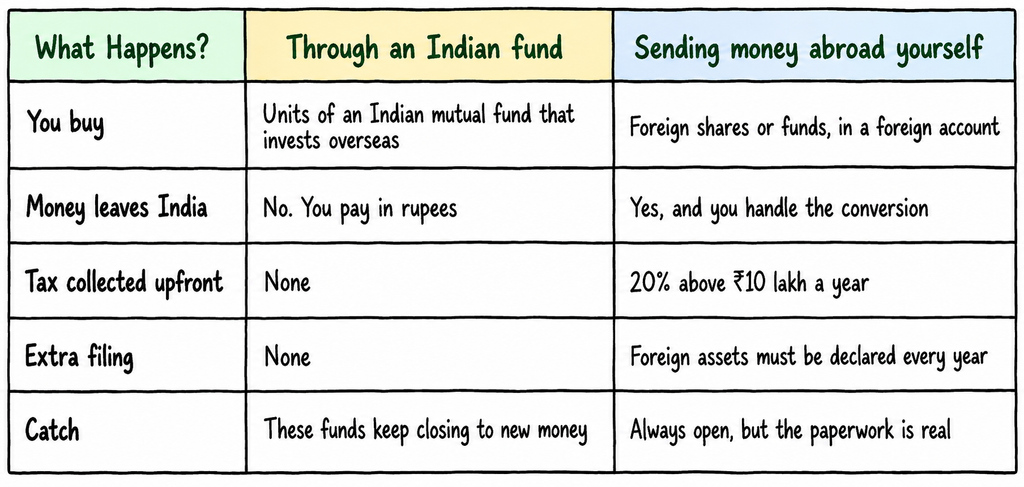
For almost everyone, the first column is the one to use. The second exists for people with a lot to invest and a reason to want the shares directly.
2. The Easy Route Keeps Shutting
An Indian fund that buys foreign shares does all the hard work for you. You pay in rupees, from your usual account, and the fund deals with everything abroad.
There is one problem, and it is not the fund’s fault. Indian mutual funds are allowed to hold only so much abroad. The cap is seven billion dollars for the whole industry, plus one billion set aside for foreign listed funds. It is not a limit for each fund. It is one pool they all share.
When that pool fills up, funds have to stop taking new money. This has now happened more than once. Several fund houses paused or capped fresh money into their overseas schemes during 2026. That is why a monthly payment into one of these funds can suddenly stop going through. So before you plan around one of these funds, check that it is actually open. It may not be, and it may close again later even if it is open today.
3. The Tax Treatment Quietly Improved
This part changed recently, and a lot of older advice still has it wrong. International funds used to be caught by a rule aimed at debt funds. Because they hold no Indian shares, every gain was taxed at your slab rate however long you held them. For someone on the highest slab that meant thirty per cent. The rule was rewritten. It now catches funds that put more than sixty five per cent into debt, which an international equity fund does not.
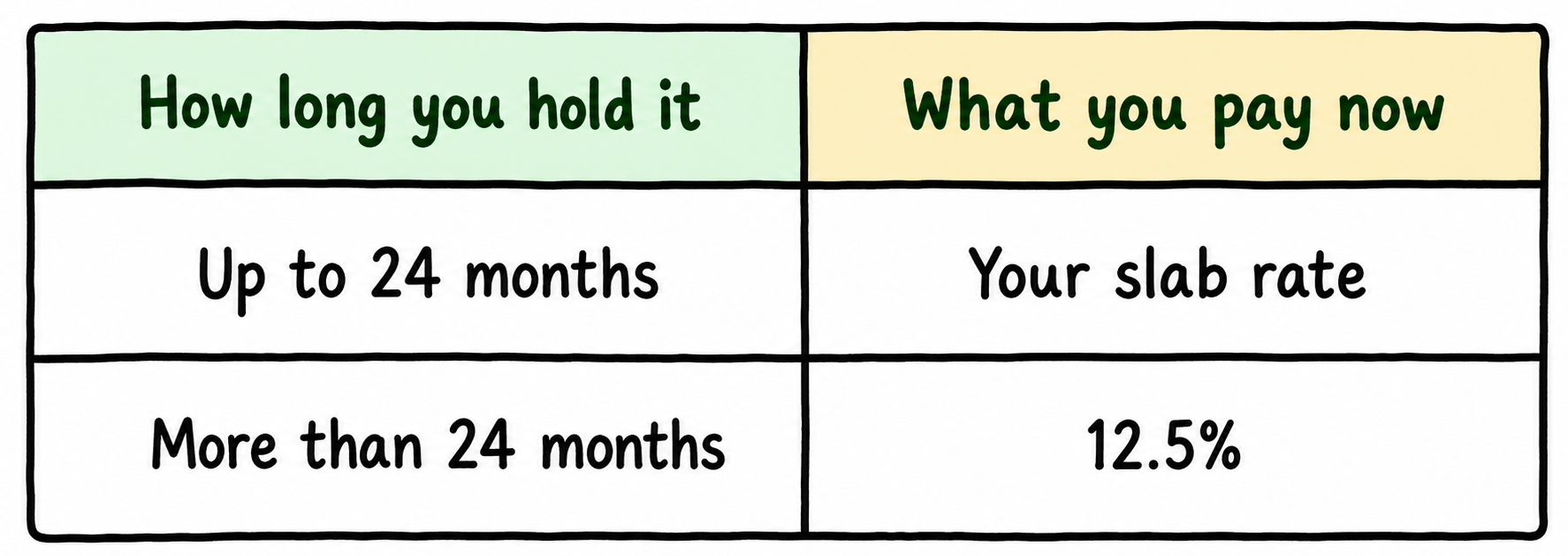
Two things worth noting. Twenty four months is longer than the twelve months an Indian equity fund needs, so this is money you leave alone. And the ₹1.25 lakh yearly exemption that applies to Indian equity does not apply here. How capital gains work is covered in capital gains basics.
4. Sending Money Abroad Yourself
If you go the direct route, you can send up to two hundred and fifty thousand dollars a year out of India. That is a ceiling almost nobody starting out will reach. Above ten lakh sent abroad in a year, twenty per cent is collected upfront. People get this part wrong, so it is worth being clear. That twenty per cent is not a tax on the money. It is your own tax, collected early. You claim it back against what you owe when you file, and if you owe less, you get a refund.
It still hurts, because it is your cash sitting with the government for months. Below ten lakh a year, none of this applies. If you buy American shares, dividends are taxed there first. The default is thirty per cent. One form saying you are an Indian taxpayer brings it down to twenty five. The two countries have a deal that allows it. That dividend is then taxed again in India at your slab rate. You are not meant to pay twice, so you claim credit for the American tax when you file. It is a separate form, and it has to go in before your return.
5. The Part That Catches People
Hold any asset outside India and you must declare it in your tax return every year. You list the foreign account. You also list the shares inside it. This applies even if you made no money on it. It applies even if your income is below the level where you pay any tax at all. Getting it wrong is expensive. The penalty for failing to declare a foreign asset is ten lakh rupees, for each year you did not declare it. And the tax office already knows. Countries now share account details with each other. Since July 2026 your foreign account shows up in your own tax record on the tax website, going back years.
So this is not a rule you can quietly ignore. If you send money abroad yourself, declaring it every year is part of the deal. It is the single best reason for a beginner to use an Indian fund instead.
6. Do You Need This Yet?
Probably not, and it is worth saying so plainly. Investing abroad is a finishing touch. It matters once you have a decent amount invested and the basics are running. Before that, what changes your outcome is the boring stuff.
- A buffer you can reach, covered in build an emergency fund that fits your life.
- Money leaving your account on a fixed date, before you can spend it.
- One cheap index fund, on the direct plan, held for years.
- Term cover, if anybody depends on your income.
If all of that is in place and you want to spread beyond one country, start with an Indian fund that invests overseas. Keep it a modest share of what you own. Check it is open to new money before you plan a monthly amount around it.
One thing tonight. Work out what share of everything you own sits in Indian assets. For most people the answer is all of it, and knowing that is the point of the exercise. The net worth calculator will lay your holdings out for you.
This article is for learning. It is not personal financial advice, and it is not a recommendation of any product or provider. Money invested abroad carries currency risk. A fall in the rupee helps you, a rise works against you. Tax rules, sending limits and the industry cap here are as they stood in the tax year 2026-27, and all of them change. Declaring foreign assets is a legal duty with heavy penalties, so check your own position with a qualified tax adviser. For advice about your own money, speak to a SEBI-registered investment adviser.